
The Myth of Allelopathy
Why corn struggles after rye (and how to fix it)
Mike
1/23/20263 min read
Generally, farmers have avoided planting a rye cover crop ahead of corn. The most common concern we hear about this is "Allelopathy." The common belief is that the rye is releasing chemical toxins into the soil that are poisoning the corn. It’s a scary word, and many universities use this as the basis for recommending that rye be terminated two weeks prior to planting corn.
But here is the truth we’ve learned after years of doing this on our own farm: It’s probably not poison. It’s hunger. The "yield drag" associated with rye usually isn’t chemical warfare; it’s a management issue. Specifically, it’s a nitrogen management issue. It can be done - we’ve been planting corn after rye for over 10 years and we don’t see any yield drag when N is managed appropriately.
The Real Culprit: The Carbon Penalty
To understand why corn can turn yellow after rye, you have to look underground.
Cereal rye is a high-carbon crop. When you terminate rye (especially if it’s tall, headed-out rye), you are adding a massive amount of carbon to the soil surface. Soil microbes—the bugs that break down residue—love this carbon. It’s their food source.
But to eat that carbon, those microbes need energy. And their energy source is Nitrogen.
If there isn’t enough free nitrogen in the soil, the microbes will steal it. They are more aggressive than young corn roots. They will tie up the available nitrogen to break down the rye trash, leaving your corn crop starving. That yellowing isn’t a toxin; it’s a nitrogen deficiency.
We call this the "Carbon Penalty."
The Solution: Front-Load Your Nitrogen
The mistake many farmers make is sticking to their standard nitrogen program when moving to cover crops. If you rely heavily on sidedressing later in the season, you are arriving too late to the party. The tie-up happens early, right when the corn is trying to establish.
To plant corn into rye successfully without the yield drag, you have to change when you apply your N.
Feed the Plant Early: You need to put nitrogen right where the seedling can get it. This might mean 2x2 starter on the planter, or a broadcast application immediately before or after planting.
Shift the Ratio: Instead of saving the bulk of your nitrogen for V6 sidedress, move a significant portion up front. You need to overwhelm the microbes so there is enough N for both the breakdown process and the corn crop.
Don't Rely on the Soil Bank: In a tillage system, tillage releases mineralized nitrogen. In a cover crop/no-till system, that biological release happens later. You have to bridge that gap.
The Proof: Our field trials
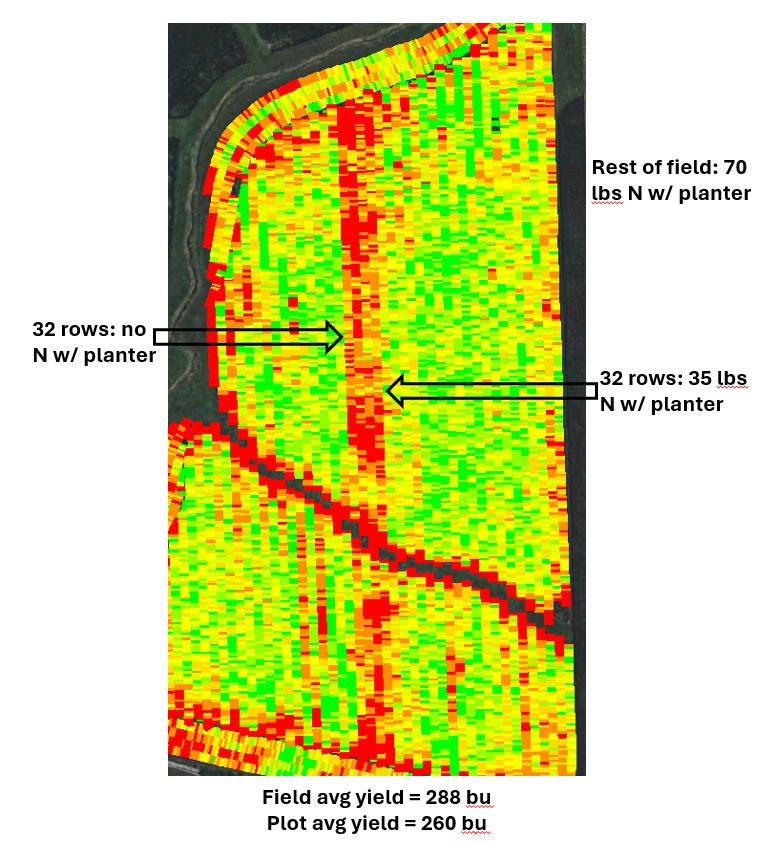
You don’t have to take our word for it - just have a look at our data. The figure at the top of this article shows a trial we did in 2024. This field had corn planted into cereal rye (approximately 30 inches tall) that wasn’t terminated until 2 days after planting. Most of the field received 70 lbs of N dribbled on both sides of the row with the planter. The trial strips received either 0 or 35 lbs of N at planting. As you can see, there was a 28 bu/ac yield decline in the test strips. This clearly demonstrates the importance of having enough N available early in the growing season.
Why Bother? (The Payoff)
If it requires managing nitrogen differently, why do it?
Because that same root system that causes the temporary tie-up is also what builds your soil structure. It’s what holds your field together during a 3-inch rain in April. And for those of us with livestock, rye is the best tool we have for holding onto manure nutrients.
The rye acts as a biological vault. It soaks up the nitrogen from your fall or spring manure application (preventing leaching) and holds it in the biomass. Once the "Carbon Penalty" phase passes and the rye breaks down later in the summer, much of that organic nitrogen is released back to the corn - often right when it needs it for grain fill.
The Bottom Line
Don't let the fear of allelopathy keep you from the benefits of cover crops. The chemistry is manageable if you respect the biology.
If you’re planning to plant corn into rye this spring, let’s talk about your nitrogen plan. We can help you figure out the right rates and timing to ensure your corn stays green from emergence to harvest. Check out our N tie-up estimator to get an idea of where to start.